
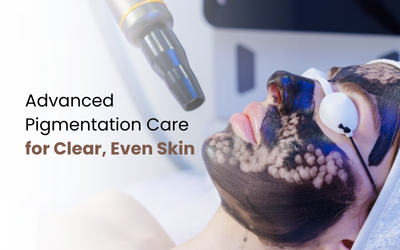
Advanced Pigmentation Care
for Clear, Even Skin
Get Started
Pigmentation in Pakistani Skin: Causes and Treatments
Skin pigmentation concerns are extremely common in Pakistan, especially among individuals with deeper skin tones. From melasma and acne marks to stubborn dark patches, pigmentation on face can affect confidence and overall skin clarity.
Understanding skin pigmentation, its triggers, and safe treatment options is essential for achieving long-term results. At DDAC (Defence Dental & Aesthetics Center), we provide medically guided Skin Treatments and Skin Rejuvenation solutions tailored for Pakistani skin. This guide explores Types of Pigmentation, pigmentation Causes and Risk Factors, pigmentation Symptoms and Appearance, and advanced Pigmentation Treatment and Management options including Exosomes Therapy.
What is Skin Pigmentation?
Skin pigmentation refers to the natural coloring of your skin determined by melanin. When melanin production becomes uneven or excessive, darker patches or spots develop.
In Pakistani skin types, pigment-producing cells are highly responsive. Even mild sun exposure or inflammation can trigger visible pigmentation on face and body.
Read More: Chemical Peels 101: Choosing the Right Peel for Your Skin
Types of Pigmentation Common in Pakistan
Understanding the Types of Pigmentation helps determine the correct management approach.
1. Melasma
Melasma appears as symmetrical brown or grayish patches, usually on cheeks, forehead, or upper lip. It is commonly linked to sun exposure and hormonal shifts.
2. Post-Inflammatory Hyperpigmentation (PIH)
This occurs after acne, irritation, burns, or skin trauma. Dark marks remain even after the initial inflammation heals.
3. Sunspots (Lentigines)
Caused by long-term UV exposure, these flat brown spots develop on sun-exposed areas like face and hands.
4. Periorbital Hyperpigmentation
Dark circles may result from pigment, vascular visibility, or genetics. In Pakistani skin, multiple factors often overlap.
Each type requires customized Pigmentation Treatment and Management for optimal results.
Read More: Top 3 Skin Treatments for a Glow‑Up Before Big Events
Pigmentation Causes and Risk Factors
Understanding pigmentation Causes and Risk Factors helps prevent worsening of pigmentation.
Sun Exposure
UV radiation stimulates melanin production and worsens existing pigmentation on face.
Hormonal Changes
Hormonal fluctuations may increase pigment activity.
Genetics
Family history plays a strong role in melasma development.
Skin Inflammation
Acne, harsh cosmetic treatments, and skin injury can trigger pigmentation.
Aging
Cumulative sun exposure over time leads to uneven tone and dark patches.
Pigmentation Symptoms and Appearance
Recognizing pigmentation Symptoms and Appearance ensures timely care.
Common signs include:
- Brown or gray patches
- Uneven skin tone
- Dark spots after acne
- Pigment that deepens with sun exposure
- Symmetrical facial discoloration
Pigmentation on face may gradually intensify without proper protection.
Pigmentation Treatment and Management
Effective Pigmentation Treatment and Management focuses on controlled skin renewal and protection.
1. Daily Sun Protection
Broad-spectrum sunscreen is essential to prevent further darkening. Protective clothing and shade are equally important.
2. Professional Skin Treatments
In-clinic Skin Treatments offer safer and more effective results for moderate to severe pigmentation.
Advanced Skin Treatments at DDAC
At DDAC (Defence Dental & Aesthetics Center), every pigmentation plan begins with detailed skin analysis.
Chemical Peels
Superficial peels gently remove pigmented surface cells and promote brighter skin tone.
Laser Therapy
Low-energy pigment-targeting lasers help break down excess melanin safely in darker skin types.